Showing posts with label Output and Growth. Show all posts

Sunday, February 27, 2011

Volume 3 Issue 9: Two-Cent Economics

Past and Present - Did Time Stop?

This is one of those posts where I let the pictures do the talking. I will show you a series of pictures of cities and the years when those pictures were taken. For starters, this exercize shows us how fast and how much the world has changed and advanced in the past few decades.

Atlanta - 1961
Atlanta - Present Day
Brazil - 1970s 
Brazil - Present Day
Hong Kong - 1970s

Hong Kong - Present Day
Houston - 1960s
Houston - Present Day 
London - 1997
London - Present Day
Manhattan - 1931
Manhattan - Present Day
Melbourne - 1921
Melbourne - Present Day
Moscow - 1997
Moscow - Present Day
Seattle - 1970
Seattle - Present Day
Yokohama - 1978
Yokohama - Present Day


Tampa - 1956

Tampa - Present Day
Tokyo - 1945
Tokyo - Present Day
I suppose up until now, you would not have been too surprised by the changes that you see throughout the above countries. After all, most of them are developed countries anyway. You must be wondering when I am going to show you China by now. Well, you don't have to wait any longer. Below, you will not only see China, but some of the other emerging economies as well, such as Korea, Singapore, Indonesia etc. Beware, some of these photos may be shocking. 

Shanghai - 1990

Shanghai - Present Day
Chongqing - 1998
Chongqing - Present Day
Makati City, Philippines - 1980s
Makati City, Philippines - Present Day

Mexico City - 1950 

Mexico City - Present Day
Dubai - 1990


Dubai - Present Day


Jakarta - 1960s


Jakarta - Present Day
And this may be shocking to you, but the picture below is Seoul, Korea in 1961.

Seoul - 1961

Seoul - Present Day
And the next picture is from our neighbor, Singapore. By now, one must wonder what has become of Malaysia in the last few decades.

Singapore - 1974

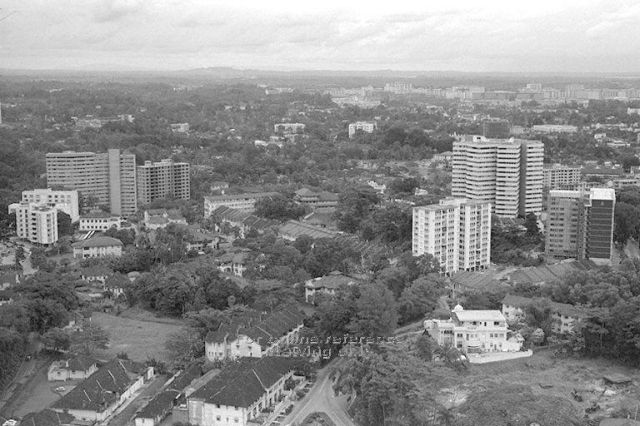
Singapore - Present Day
I guess here is the big finale. Maybe not so big. If you look at the picture below, many of you should recognize what we know as Chulia Street in Penang. 

Chulia Street - 1960s
Chulia Street - Present Day

Comparing Chulia Street in 1960s with that of today, you would probably think that time stood still for Penang. In fact, the trishaw from the 1960s is still there in the picture of present day Chulia Street. Compare Penang's performance with those of all the countries above and we wonder how did Penang fall so far behind. Chulia Street has barely developed in the past 50 years. It is indeed a sad case for Penang and Malaysia. Well, in the spirit of Malaysia Boleh, I have one last comparison to share. Below are pictures of a city that has barely changed through time as well. 

Greece - 1860s
Greece - Present Day
Yes, you read it right. Apart from adding a few more buildings, the skyline of Greece has barely changed in the past 150 years. This is the story of a more or less bankrupt nation. The next question to ask is, are we trying to become like Greece?


Sunday, October 24, 2010

Economics @ Home © Volume 2 Issue 22

Troubled times - 100-storey style

These are troubled times indeed. With the launch of the 2011 Budget, how can a self-respecting newsletter proclaiming to discuss economics not talk about it?

By now, most of us would have read and heard and discussed and bitched about how the government is wasting the people's money in trying to build a new 100-storey mega tower. The government has subsequently rebutted by saying that the money used will not be the people's money, but belongs to PNB. So, this week's issue will avoid repeating the gory and now already boring details about the 100-storey building.

Econ @ Home will take a look at what the 2011 Budget means for regular Malaysians at home. After all, that is what the newsletter is for. Bringing down economics at the macro level to the micro folk at home. Making common sense, common.

For starters, bear with me for elaborating a little bit more about the Warisan Merdeka mega tower. Most people who bitch about this issue claim that the money is being wasted on a useless mega-tower and have recommended using the money in places like health, education, security and what not. Everyone wants a little piece of this hot pie. But what the country needs is not spending in these areas. haven't you all learnt your lessons? The government can spend money in these areas. We have seen the likes of RM48,000 laptops, and the like. The trouble with the Malaysian economy is in its policies. Where the money is spent is just secondary.

Now that that part is settled, what does the 2011 Budget mean for folks at home like us, the common folk that try to earn an honest living to spend on the needs and wants of our lives?

First of all, the lack of any initiative to reform the policies bodes huge ills for the nation. The ETP is a huge disaster compared to the NEM that was launched in March this year. Econ @ Home is not anti-government. But Econ @ Home is anti-stupidity. With such a well-written plan like the NEM available, it requires almost no intelligence to go along such plans. How can improving productivity and competitiveness be so bad?

How can Malaysia and Malaysians keep denying to themselves that nothing is wrong with our policies? The government's current stance is, "Don't worry, this time, business is not as usual. That's because the private sector will be the one spending the money." Why have they not realized that it does not matter who is the one spending the money. My favorite simile for such a situation is, "Be it the government or the private sector that adopts the white elephants, they will still be white elephants". The joke of the whole situation is, the government is telling the private sector where to spend their money. This is made worse when our infamous bankruptcy prophet, Idris Jala says that, "If the projects fail, it will be the private sector's fault". I do not need to elaborate further the irony of the issue.

Second, what do minimum wages mean for us? Sadly, on the surface, to most of us, it means nothing. This is because Malaysia as a whole, is being squeezed in the middle income trap. But is it true that it does not affect us? Let me just touch on why minimum wages are bad in an unproductive and uncompetitive country like Malaysia. Mind you, this is just simple economic theory that anyone who studied Economics at the pre-university level can tell you (Hmmm... I think I need to qualify what pre-university means because Matriculation is a lazy student's excuse of a pre-university education). You may ask, "How can minimum wages be bad?" It raises the wages of the poor, and subsequently, their standard of living.

Ordinarily, this would be a good idea if the country was a productive one like Germany or China. But mentioning Malaysia along the names of those industrious countries is like blasphemy. When you impose minimum wages, you will immediately raise the costs of hiring for companies. While local companies have no choice by to absorb these costs, MNCs do not have to deal with this. All they have to do is set up a new factory in Vietnam and voila, they would have cut their wage expenditure by 75%. Can we afford to lose the few meager FDI that still remain within the country?

What does this mean for local companies? Since they can't really move out of the country at their whim, they have 2 options. First, cut expenditure elsewhere. They may have to cut expenditure on advertising, research and development, and even training budgets. Cutting advertising will ultimately lower sales, and reducing expenditure on research and training simply means the firms have no hope of moving up the value chain. Lower resources also mean that firms are unable to bid for the talent that they seek. How are we going to achieve competitiveness? Their second option is to pass the cost of hiring to the consumers. Now, guess who the biggest group of consumers are? If you guessed the middle class, then you are most likely to be correct. It is us, the hardworking people who struggle to make an honest living who have to bear the burden of higher prices because of increased costs. Since the middle class does not fall into the levels of minimum wages, it does not help them at all. So how can the middle class cope with increased costs of living? Simple, by demanding higher wages. Now, I hope you can see where this is going. In economic theory, this is called the wage-price spiral. Higher prices drive wages higher. Then higher wages will drive prices higher.

Now, the issue on services tax. What does the increase of 5% to 6% mean for us and for the government? Well, needless to say, the majority of our expenditure will be consuming services. Let's say that 70% of our expenditure is on paying for services. That would entail a raise of 0.7% in our typical expenditure pattern. That is by all means palatable. What does this mean for the government? If you look at the economic report downloadable from the Ministry of Finance's website, you will notice that revenue from services tax will increase ONLY from 2.4% to 2.5% of revenue. That is a 0.1 percentage point increase in revenue. One can only wonder, what is the rationale for this? If the government wishes to raise funds to fund their mega projects, why not just rationalize the subsidies or trim down the bulging civil service. Can you imagine that 28% of the government's money is spent on paying civil servants in emoluments? Of the total labour force, only about 10% are from the civil service. What this means is that, 28% of the government's money is spent ONLY on paying 10% of the hardworking people of Malaysia. This is not even counting the pensions and gratuities and whatever other benefits the civil servants have.

I hope that these 3 issues will open your eyes further on how the 2011 Budget affects the typical Malaysian at home. I tried not to dwell too much on the 100-storey tower simply because all of you have already over-discussed it. By the way, as a trivia, as at time of completion of this article, there are 144,004 supporters on the "1M Malaysians Reject 100-storey Mega Tower" page.

Sunday, October 04, 2009

Economics @ Home © Volume 1 Issue 11

Output and Growth - Part 4 (Final Part)

In the previous three issues, we have talked about the importance of output and growth, and underlined the two main ways to expand output, i.e. through increase in efficiency and growth of resources. In the last issue, we explored the detriments of leakages which sets a prelude to the goal of the final part of this series. In this issue, we will explore ways to grow our resource base on a macro and micro level.

As mentioned in the previous issue, the key to growth is savings because savings lead to investment, which consequently leads to growth in capacity. What do you think of when you think about "savings"? At the macro level, savings is basically derived from the realized government budget surplus at the end of each financial year. You can think of savings as a form of retained profits. Of course, the role of the government is not to maximize profits (that would actually defeat the purpose of having a government as a market regulator), the government is however responsible towards economic growth. While this may be achieved through growth in efficiency, the government is also responsible in incentivizing growth in capacity.

In the previous issue, I talked about investing in infrastructure and human capital. While all these are part of the budget, I feel that it is important to maintain a slight surplus for investment purposes to grow the government's "savings". Think of Singapore's Temasek Group, a specialized investment machine that has the sole purpose of growing the size of funds. As many wise men have aptly expounded, the goals of politics and economics will never converge in the short run, simply because politics focuses on the short term while economic growth is a long run goal. Nonetheless, this only stresses the importance of a stable government (which has been miraculously achieved by Singapore) so that it can focus on the long run of the nation without having to please the voters in the short run so that it gets reinstated at the next election.

I do however maintain that foreign exchange reserves are not classified as excess funds because these funds are usually invested in liquid assets because their purpose is for emergency usage. It is intuitive that we should save money for emergency purposes but any educated person should know that postponing current consumption for future gains is not an unfamiliar concept.

However, as I exhibited in the previous issue, dumping your funds in fixed deposits (FD) is merely a slow but sure way of getting poorer. Where else can we put our funds?

Although more and more people are becoming aware of investing their money in the stock market, many are still wary of its risks. People are afraid of the unknown and are even more lazy to learn about the stock market. I am not here to allay your fear of the stock market, but merely to explore some alternatives that might actually generate some real positive returns. I will tackle these investment vehicles in the order of least practical to the most practical in my own point of view. I take no responsibility for the performance of these investments because most of them require some amount of knowledge and skill as well as a lot of hard work. After all, there is no such thing as a free lunch. I cannot and will not advise anyone to just dump your money in any of these vehicles and hope that they generate luxurious returns because that is not possible and it is also illegal for me to induce purchases in some of these investments because I do not have an investment advisor license.

1. Fixed Deposits

I cannot mention enough how useless these instruments are in terms of growing your funds. The era of high interest rates are gone. With expected inflation to be low in the coming years, there is very little chance for interest rates to be scaled upwards. Even so, on average, fixed deposit interest rates merely track inflation over the long run. In fact, the yield spread could even be used as a predictor of expected inflation. That exemplifies how strong the correlation is. So, there is no way of beating inflation if you place your funds in fixed deposits. However, it is important to note that these investments are basically risk-free.

2. Amanah Saham Bonds (and other Amanah Saham stuff)

I feel these funds are more for entertainment value than for anything else. Even, the ones that guarantee 5% returns for the next however many years still have very little potential to beat inflation. Nonetheless, these instruments are slightly better than fixed deposits, which is why many people are willing to spend hours waiting in line at the banks to subscribe to these funds. An even funnier fund is the one that invests in equities. It promises to track the KLCI. There is almost no skill in that because any person with a trading account can basically allocate his funds equally throughout the KLCI counters and you would basically get the same performance, but without incurring management fees.

3. Property Investments

This one is pretty debatable. While it may generate potentially high returns, I feel it is not practical for beginner investors like you and me because of three reasons. First, its initial capital outlay is extremely high. The down payment to purchase property is very high, which may tie up our funds to invest in other opportunities as and when they emerge. Second, property investment is extremely illiquid. This ties in closely to the first reason because it is extremely difficult to dispose off these investments when we want to realize our gains or purchase other opportunities that we deem to be better. Third, in most cases, we have to incur guaranteed costs while our incoming cash flow is unpredictable. That is to say, we have to pay monthly instalments on our loan while we may have difficulty renting out the property, assuming that the property is already completed.

4. Unit Trusts (Equity funds, to be specific)

This category is huge. There are tons of different types of unit trusts. However, I will focus mainly on equity funds because the rest are just a combination of 1, 2 and equities. First of all, let me explain what a unit trust is. Basically, it is a collection of funds from investors with a particular set of investment objectives placed in the hands of a fund manager to invest according to those objectives. Equity funds is a unit trust fund that invests predominantly in equities (stocks, if you're unfamiliar with the term equities). One of the main attractions of equity funds is that the potential returns tend to be higher. Nonetheless, this is debatable because the performance of the fund greatly depends on the abilities of the fund manager. So, due diligence is still needed when selecting a fund to invest in. Like I have preached before, there's no such thing as a free lunch.

Why do I feel that this is more practical than the previous three investment vehicles? First, the concept of unit trust allows one to invest with very small capital. Minimum initial investments are around RM1000. Second, if we can find an able fund manager, we can ride on the "expertise" of the fund manager to obtain better than average returns. Typically, decent performing unit trusts average about 8% per annum in the long run. That is far higher than your long run FD rate. As to why the returns are so high, it is because the funds are invested in equities, which are companies listed in the stock market, which (hopefully) run a good business to churn a good profit that allows high returns on investments.

The drawback of unit trusts is, however, the management fees that you have to pay the fund manager. While this is not a fee that you have to fork out money and pay regularly, but it will be deducted from the fund based on the performance of the fund manager. Usually, this fee tends to be rather high. In addition to that, there is a commission that needs to be paid to the agents of unit trusts for marketing the unit trusts for the company. These fees can sometimes eat into the returns of our investments. Nonetheless, unit trusts tend to outperform plain deposits in the long run.

5. Equities

This is the most interesting and possibly the most promising investment vehicle of all. While diving into share investment without any knowledge is risky, knowing what you are doing reduces most of the riskiness involved. It is true that the risks of investments are there, but due diligence to ensure a high margin of safety minimizes the risks involved. Ben Graham, the guru of value investing said "Investing is most intelligent when it is most business-like". This sentence sums up what investing is all about.

Imagine yourself starting a business. Think of a list of criteria of how you want your business to be. These are the criteria that you should be looking for in the companies that you invest in. I do not condone speculation and will never do so. I am an advocate of value investing and the idea of value investing is simple. It is like paying RM5 for something that is worth RM10. If this does not attract you, then it will never attract you at all.

While the idea is simple, the work is hard. Most people would preach the risk-return trade-off in investing by saying that in search of higher returns, we must take more risks. This is totally untrue. What I know to be definitely true is that in search of higher returns, we must do more work. The key phrase of this issue is "due diligence".

I am in no position to teach anyone about value investing at this point. What I can suggest is to read widely regarding value investing. Books like "The Intelligent Investor" and "Security Analysis" by Benjamin Graham are vital. Think of reading as an investment in your personal growth. That is how you grow your personal resource base as well.

As a final note, you should note that one of the most important things in investing is that there is no formula for it. There is no one true way to grow your money. There are many ways to grow your resources. Some are able to grow it at a faster rate, some at a more conservative rate. One thing for sure is that nothing comes for free. Effort is essential.

After a possibly arduous journey over four issues, it is useful to go through the important things to take from this mini-series. We talked about what output is and the importance of maximizing output. We also talked about the two ways to maximize our output, via efficiency and growing our resource base. In this final issue, we explored the ways in which we can grow our personal resources. I would like to end by reiterating the recurring message throughout this series, which is "money does not grow on trees". So I urge you to invest in yourself if you seek to maximize our output and growth.


Wednesday, September 30, 2009

The Lean and Mean Machine Pte Ltd Monthly Income Statement September 2009

The second monthly income statement comes as a shock even to myself. As I monitor it almost daily, even I wondered if the Lean and Mean Machine could manage to scrape through with a profit for this month and fortunately it has.

I have made additional investments as you can see from the investment fees. Next month, when I disclose the quarterly balance sheet, you will have a better idea of what the company's portfolio size is as well as its rough performance.

Compared to the previous month, the food expenditure increased from RM582 to RM697. This is totally unacceptable as it exceeds the monthly budgeted amount of RM160 per week, which translates to RM686 for the 30 days of this month. More discipline is definitely needed to curb this excessive dining spree.

Fuel expenditure has maintained within the region of RM160, but this is still on the high side. Hopefully fuel expenditure can be reduced in coming months to push the cost down further.

You will see several new items in this month's income statement. First, the water bill is at RM27, the handphone bill is at a whopping RM170. This is because it includes the previous month's handphone bill.

Because of all these excessive unrecorded expenditure from the previous month, the net profit margin has tumbled to a meagre 2.83%. Thus, the NAV per share still managed inch up slightly.

The Lean and Mean Machine Pte Ltd Copyright © 2009

Income Statement

September 2009

Total

Interest Income

-

Dividend Income

-

Net gain on quoted disposal of investments

-

Revenue

2,215.70

Less: Operating Expenses

Food

697.18

House rent

330.00

Fuel

158.73

Parking

148.00

Books

174.70

Electricity Bill

61.50

Handphone Bill

170.00

Internet Bill

55.00

Water Bill

27.00

Futsal

10.00

Investment Fees

14.54

Others

306.35

Profit before tax

62.70

Income tax expense

-

Profit after tax

62.70

Net Income

62.70

Basic Earnings Per Share

0.0078

Net Profit Margin

2.83%

Return on Equity

0.73%

NAV

1.0169


Sunday, September 27, 2009

Economics @ Home © Volume 1 Issue 10

Output and Growth - Part 3

Dividing the topic of output and growth into several parts was not the initial intention. Ordinarily, I would have preferred to leave a topic to one part alone. However, as I began typing, I realized that there was actually more content than I thought. I also understand that it is difficult to finish a long article in one reading. In this third part, I will exhibit how leakages are detrimental to growth prospects of our resources at the macro and micro level.

Conventional economics suggest that growth comes from investment, and investment is a result of savings. Investment is a very broad term and the things that come to mind when we think about investment are things like stocks and capital expenditure. To be very specific, investment is the postponement of current consumption for future gains. A typical individual would save a portion of his income, usually in the bank and earn the interest offered on deposits until he needs the money. What began as perhaps RM1000 in savings could grow to RM1030 after a year with a 3% growth rate and RM1060.90 after two years. If he had not postpone his consumption, then he can only purchase up to RM1000 worth of products. The idea of growing resources seems easy enough.

People who have studied Keynesian theory would surely recognize that the multiplier of national income is a function of marginal propensity to save. The key here is to achieve maximum growth rate. Is 3% a high growth rate? Before we explore how to achieve high growth rates, we should first take a look at some examples of how growth can be achieved (or lost).
Malaysia was once known as one of the Asian Tiger economies. This is a very misleading statement. Upon a closer look at the underlying factors leading to growth in national income, we will realize that while it is true that our national income did grow at a rapid rate, we have failed terribly at growing our resources. As luck would have it, our country was bestowed riches in the form of natural resources. We are net exporters of crude oil, palm oil and rubber. As technology inevitably advances, we were able to harvest these resources more efficiently and in larger amounts. This has thus increased our national income or as we call it, output.

As mentioned before, growth is a function of investment. While Malaysia happily constructed mega projects all over the country and allowed its proceeds to "leak" through the system in terms of corruption and handouts, we forgot to save. Our country's meek attempts at investment included projects like the Multimedia Super Corridor and the poor excuse of an international airport that is in the middle of the jungle. Other excuses of investments include the billions of dollars spent on the Port Klang Free Zone (PKFZ) and attempts to increase the value-added-ness of our country's output.

I will just throw it out there that a country like India, which has one of the highest poverty rates in the world (at 50%), has a much larger network of fibre optics per square area than our country. While Malaysia has never stopped talking about high speed internet, our broadband champion, Streamyx, has yet to be able to provide consistent service even with its copper cables. When are we going to migrate to fibre optics and if we do, will it be just as inefficient? I wonder if such inefficiencies would have been minimized if there wasn't protectionism in the telecommunications industry.

While infrastructure is one way of investing, human capital is another great area to invest in. Singapore is a success story for human capital investment. Other than handouts to unqualified students, our government has also "invested" in the best technology for a select group of schools that were conveniently renamed as "smart schools". Brand new high-end computer equipment were bestowed upon these schools, funds were granted to construct labs to house these equipment and endless scholarships were awarded to the inadequate to study in these schools. When can we learn that there is no way that we can become world champions in golf, tennis or soccer by using Tiger Woods's clubs, Roger Federer's rackets, or Lionel Messi's boots in their respective sports? Giving a caveman a computer is not going to create an IT expert.

What's worse is that not only are the high-end equipment under-utilized, but they were also procured from "government contractors" who had to "bid" to supply these equipment to the schools. Of course the definition of bidding is debatable, especially in a country which refuses to keep up with the times in teaching English effectively. Goodness knows that these equipment were obtained at exorbitant prices that are way above the market price. A simple inquiry to any school will let you know that the schools are not allowed by the Ministry of Education to purchase computers from other contractors except the ones appointed by the government in the name of standardization. And I thought that the concept of buying wholesale would entail discounts that are derived from bargaining power. The obvious flaw in this system is the lack of competition.

These leakages are too common in the government bureaucracy. Not only have our resources been misallocated in terms of investment, but most of our savings are foregone via these leakages. Not only has our country failed to invest efficiently but also simply failed to save. Thus, that is why I say it is misleading to call Malaysia an Asian Tiger. We are perhaps a complacent sloth that failed to forage and store food for the winter. We have grown fat and content by exhibiting income growth without growing our resource base. We merely consumed more by producing more efficiently. How high can you build your tower if you do not build a wide base?

To apply these concepts at the micro-level, I will focus only on income for the time being. While saving our money in terms of fixed deposits (FD) is a sure way to grow income, it is probably obvious to you by now that 3% is meagre. Taking into account average expected inflation of 5%, your real returns from FD would be negative. FD is a sure way of getting poor slowly but surely. This is an example of fund misallocation.

In worse cases, we ourselves spend unnecessarily in unproductive goods and services and forego growth completely. Not all these expenditures are deliberate. Just this month, I spent RM200 on my examination fees and other smaller amounts for car-servicing etc. While these expenditures are "necessary", they function as leakages because I will not be able to invest them for future gains. The money is lost forever. Compounded at about 5% per annum, RM200 would become RM325 in just ten years, a growth of almost 63%.

While these leakages are unavoidable, we can choose to minimize those that are. For example, unnecessary shopping and fine dining. I am not forbidding myself from the occasional indulgence, but what I am saying is that skipping one or two of these expenditures per month can grow your resources quickly if invested in the right places.

As a final word, this issue of Economics @ Home dwelt upon the "do-nots" of saving and investing. What may seem like an unproductive activity is intended to create an awareness of the detriments of leakages. We often condemn the leakages that result from the government's misallocations, but also tend to overlook our own leakages. It is important to build a strong self-awareness when it comes to allocating our resources. Next week, as a conclusion, I will try to be more productive in exploring the possible ways in which we can grow our output/income more efficiently.